Kaziranga Elevated Corridor – Location, Importance, Wildlife Protection & Latest Updates (2026)
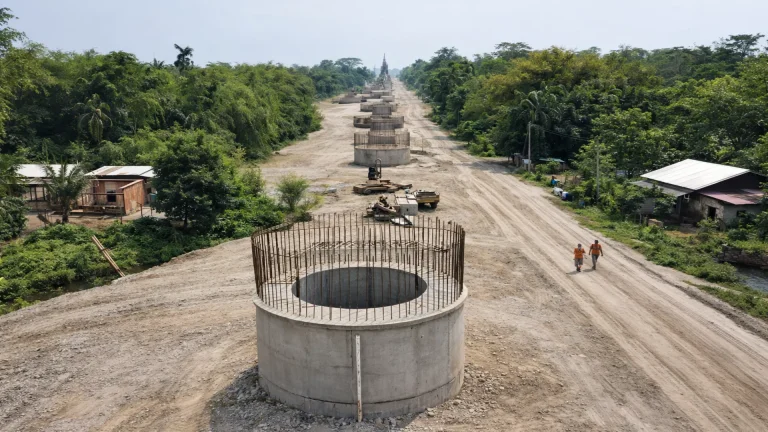
In a monumental step for both infrastructure and environmental conservation, Prime Minister Narendra Modi performed the Bhoomi Pujan of the Kaziranga Elevated Corridor Project in Kaliabor, Assam. Valued at over ₹6,950 Crore, this ambitious initiative represents a new era of development for the region. Emphasizing its importance, PM Modi described Kaziranga as more than a National Park, but rather the soul of Assam, a priceless jewel of India’s biodiversity, and a site honored by UNESCO as a World Heritage Site.
Project Overview
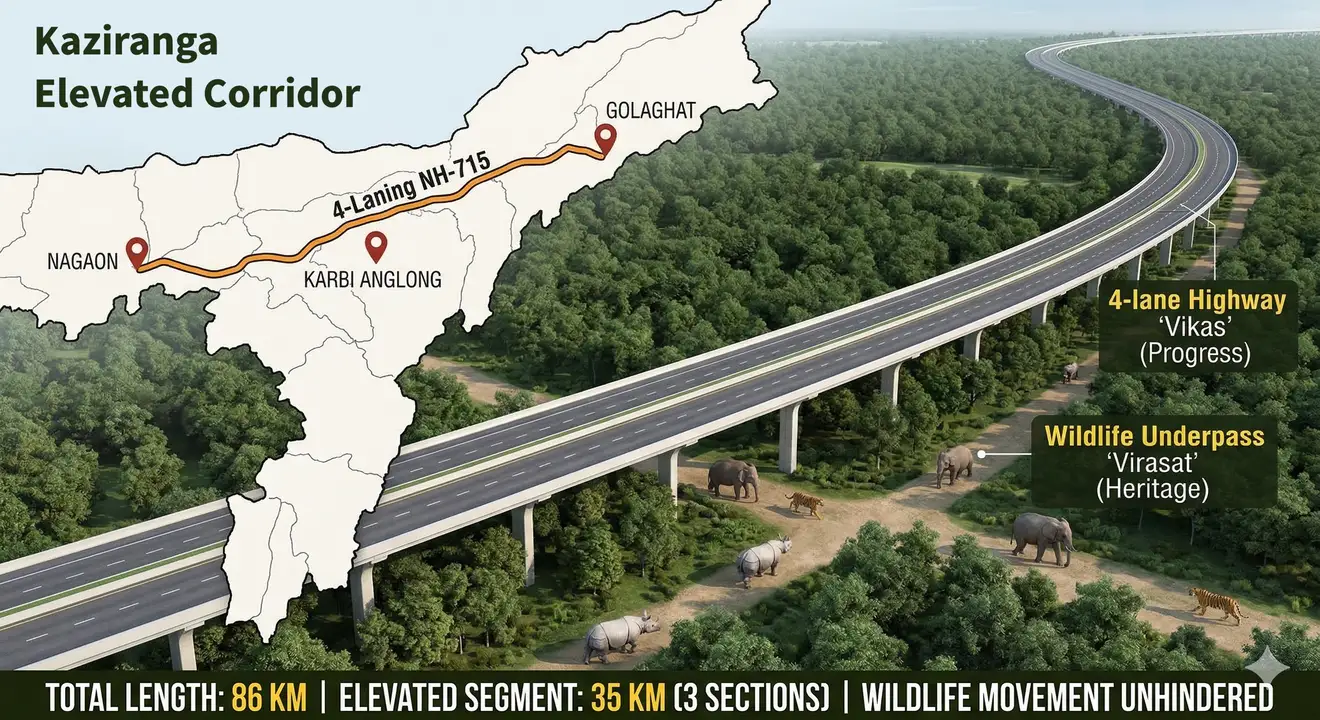
Recent updates from March 2026 reveal that the National Highways Authority of India (NHAI) received 18 bids from developers to execute this mega-project under the Engineering, Procurement, and Construction (EPC) model. Below is a quick glance at the project specifics:
| Feature | Details |
|---|---|
| Total Project Length | 86 km |
| Estimated Cost | Over ₹6,950 Crore |
| Highway Expansion | 30 km widening of the existing highway section of NH-715 from two to four lanes |
| Elevated Stretch | 35 km of Elevated Wildlife Corridor passing through Kaziranga National Park |
| Bypass Sections | 21 km Bypass section developed at Jakhalabandha and Bokakhat |
| Districts Covered | Nagaon, Karbi Anglong, and Golaghat |
| Execution Mode | Engineering, Procurement, and Construction (EPC) |
Key Features and Design Highlights
The 86 km long Kaziranga Elevated Corridor project is designed as an environmentally conscious National Highway project. The structural execution includes:
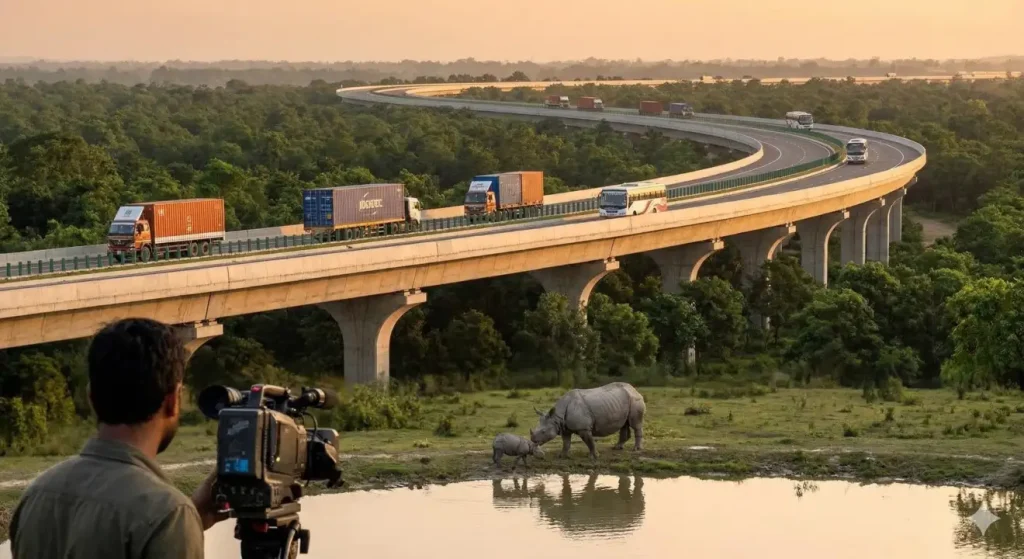
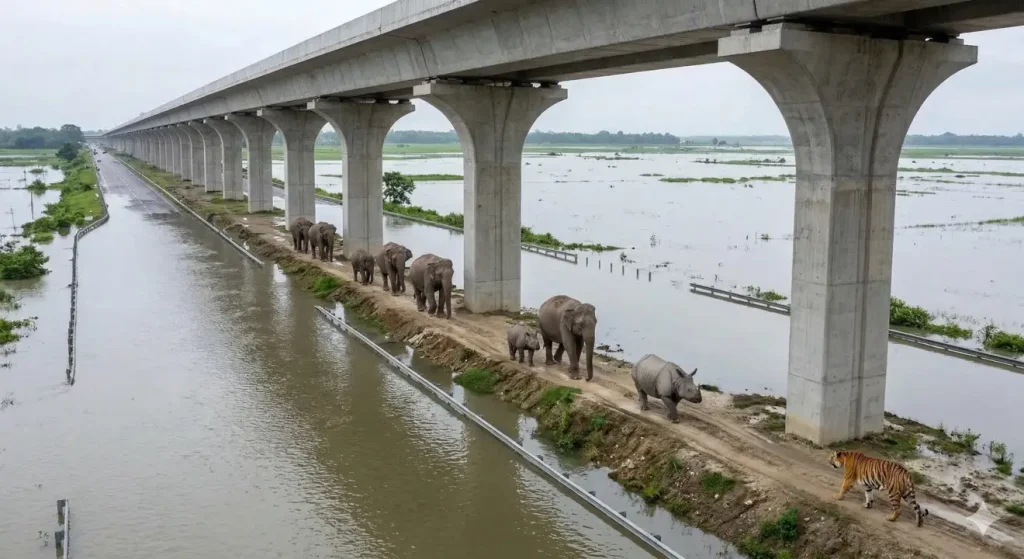
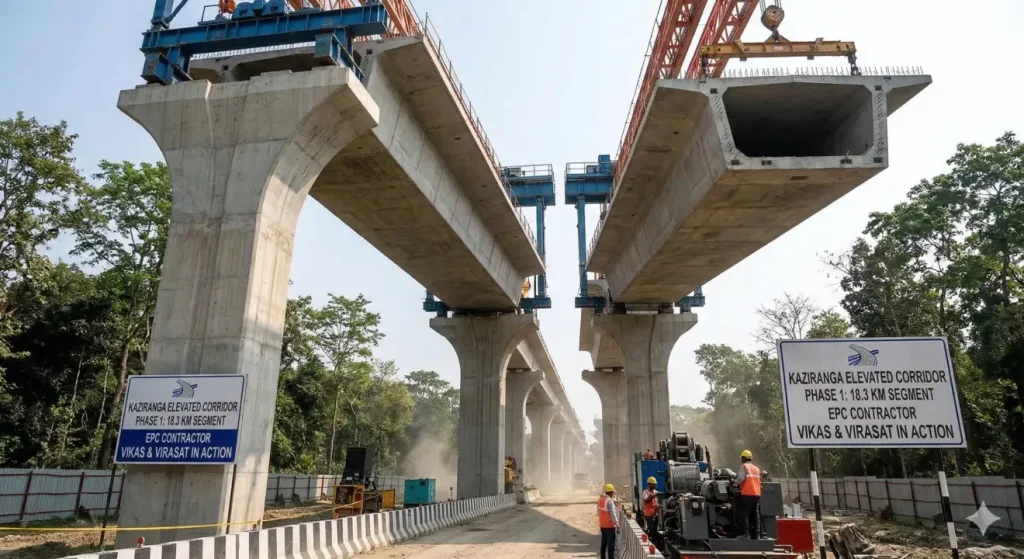
- Elevated Wildlife Corridor: The government’s effort guarantees that vehicles will pass above while wildlife movement below will remain unhindered. As per current NHAI plans, the elevated stretch will be built in three specific segments (18.3 km, 11.2 km, and 5 km) to span sensitive ecological zones.
- Comprehensive Wildlife Design: The design was prepared keeping in mind traditional movement routes of rhinos, elephants and tigers. Experts from the Wildlife Institute of India and the National Tiger Conservation Authority were heavily consulted to finalize the highway’s alignment.
- Urban Decongestion: Bypasses will be developed at Jakhalabandha and Bokakhat that will help to decongest towns, improve urban mobility and enhance the quality of life for local residents.
- Extensive Structural Support: To support seamless traffic and environmental safety, the broader project scope integrates a major bridge, multiple minor bridges, flyovers, culverts, and vehicular underpasses.
Balancing Ecology and Economy: “Vikas bhi, Virasat bhi”
Kaziranga National Park faces significant challenges during floods when wildlife seeks higher ground and must cross the National Highway, often getting trapped. The elevated wildlife corridor will ensure uninterrupted movement of animals and reduce human-wildlife conflict. This approach firmly aligns with the government’s guiding mantra of “Vikas bhi, Virasat bhi” (Progress alongside Heritage).
Protecting the region’s wildlife has seen tremendous success recently; notably, not a single incident of rhino poaching was reported in 2025. The new corridor guarantees that the park’s rich biodiversity remains protected while accommodating regional economic needs.
Boosting Connectivity in Upper Assam and the Northeast
Beyond its ecological triumphs, the corridor will significantly improve connectivity to Upper Assam, particularly Dibrugarh and Tinsukia. It will also enhance road safety, reduce travel time and accident rates, and support growing passenger and freight traffic.
Expanding the Railway Network
In tandem with road infrastructure, the Prime Minister announced the launch of three new train services from Kaliabor, marking a significant expansion in Assam’s rail connectivity.
- A new Vande Bharat Sleeper Train will connect Guwahati to Kolkata, making long-distance travel more comfortable.
- Two new Amrit Bharat Express trains were flagged off: the Guwahati (Kamakhya)-Rohtak Amrit Bharat Express and the Dibrugarh-Lucknow (Gomti Nagar) Amrit Bharat Express.
Through the execution of these integrated transport systems, India is demonstrating to the world that economic infrastructure and pristine ecological preservation can thrive hand in hand.